
Existing assembly and moisture
Roof type, number of layers, insulation, deck, prior repairs, wet areas, and attachment influence whether the roof can be repaired, restored, recovered, or replaced.
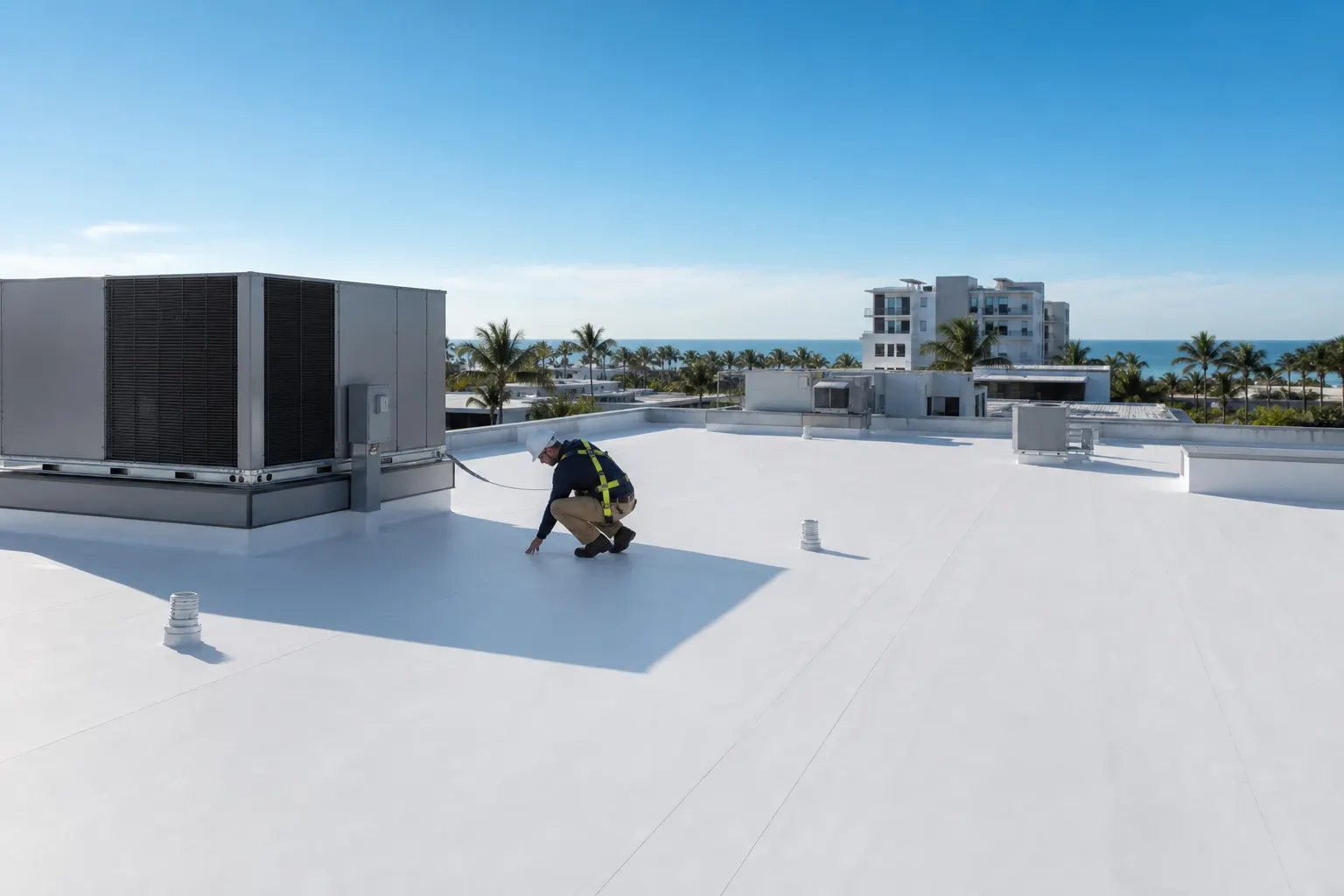
Commercial roofing decisions affect operations, tenants, capital planning, warranties, and the building envelope. Our structure separates immediate leak response from maintenance, replacement planning, and new installation so owners can act at the right level.
Tell us what’s going on and we’ll follow up with clear next steps.
Start with the specific need below, or use this page as the complete planning guide.
An active leak, an uncertain roof condition, routine lifecycle work, and a capital replacement project require different services. The commercial roofing parent page should help an owner, facility manager, or property manager choose among investigation, repair, maintenance, replacement, and new installation without assuming that every concern leads to the same recommendation.
Florida commercial roofs are exposed to heavy seasonal rain, wind uplift, ultraviolet radiation, thermal movement, and—for coastal properties—corrosive salt-laden air. Low-slope assemblies also concentrate risk at drains, scuppers, parapets, curbs, penetrations, seams, edges, and areas used by HVAC or other rooftop trades.
A useful commercial scope connects those physical conditions to the way the property operates. Tenant access, interior-sensitive areas, deliveries, staging, rooftop equipment, daily tie-ins, weather protection, noise, and work hours should be addressed before the roof is opened.
The membrane or panel is only one part of the decision. These building conditions guide the service path and system options.
Roof type, number of layers, insulation, deck, prior repairs, wet areas, and attachment influence whether the roof can be repaired, restored, recovered, or replaced.
Slope, primary drains, scuppers, overflow routes, parapets, transitions, and rooftop equipment affect how quickly water leaves and where details are stressed.
Corners and perimeter zones can experience higher uplift pressures. The permitted assembly, attachment, edge metal, coping, and flashings must fit the project conditions.
Occupancy, inventory, customer areas, HVAC needs, roof access, odor or noise sensitivity, and delivery constraints influence phasing and daily protection.
The same roof may need different strategies over time, from targeted repair to planned capital replacement.
Scheduling and phasing should account for access, rooftop equipment, drainage, tenant operations, safety, and weather exposure.
We start by identifying the owner’s problem and then develop the level of investigation and scope needed to make the next decision.
We document the reported condition, roof area, occupancy, known system, access, operating hours, previous work, and the urgency of the decision.
The review focuses on the field, seams, flashings, perimeters, drainage, penetrations, equipment interfaces, traffic areas, and interior evidence where accessible.
Findings are connected to repair, maintenance, additional testing, restoration where suitable, or replacement planning with clear scope limits.
Approved work is planned around access and occupancy, documented during completion, and closed with relevant photos, inspections, priorities, and maintenance information.
A commercial proposal is more useful when it explains what was observed, what is included now, and what remains a future or separately authorized item.
Each project page has photos, a location link, and room for a full job description.
These answers provide a practical starting point. The building, roof assembly, permit jurisdiction, and observed conditions determine the final recommendation.
Common systems include single-ply membranes such as TPO, modified bitumen, coatings where appropriate, metal, and other low-slope assemblies based on the existing building and approved design.
The decision considers moisture extent, membrane and flashing condition, insulation and deck concerns, repair history, remaining serviceability, warranty constraints, and the owner’s capital plan.
Some projects can be phased by roof area, building section, or priority, provided transitions, drainage, temporary protection, and future tie-ins are properly planned.
Use a city guide for local roof systems, weather exposure, permitting contacts, neighborhoods, and nearby communities—or explore every location we serve.
View all roofing locationsRoof replacements, repairs, storm response, and the communication that ties every project together.
1 / 22
We’ll take a look, explain what we find, and give you clear options built around your property and budget.