
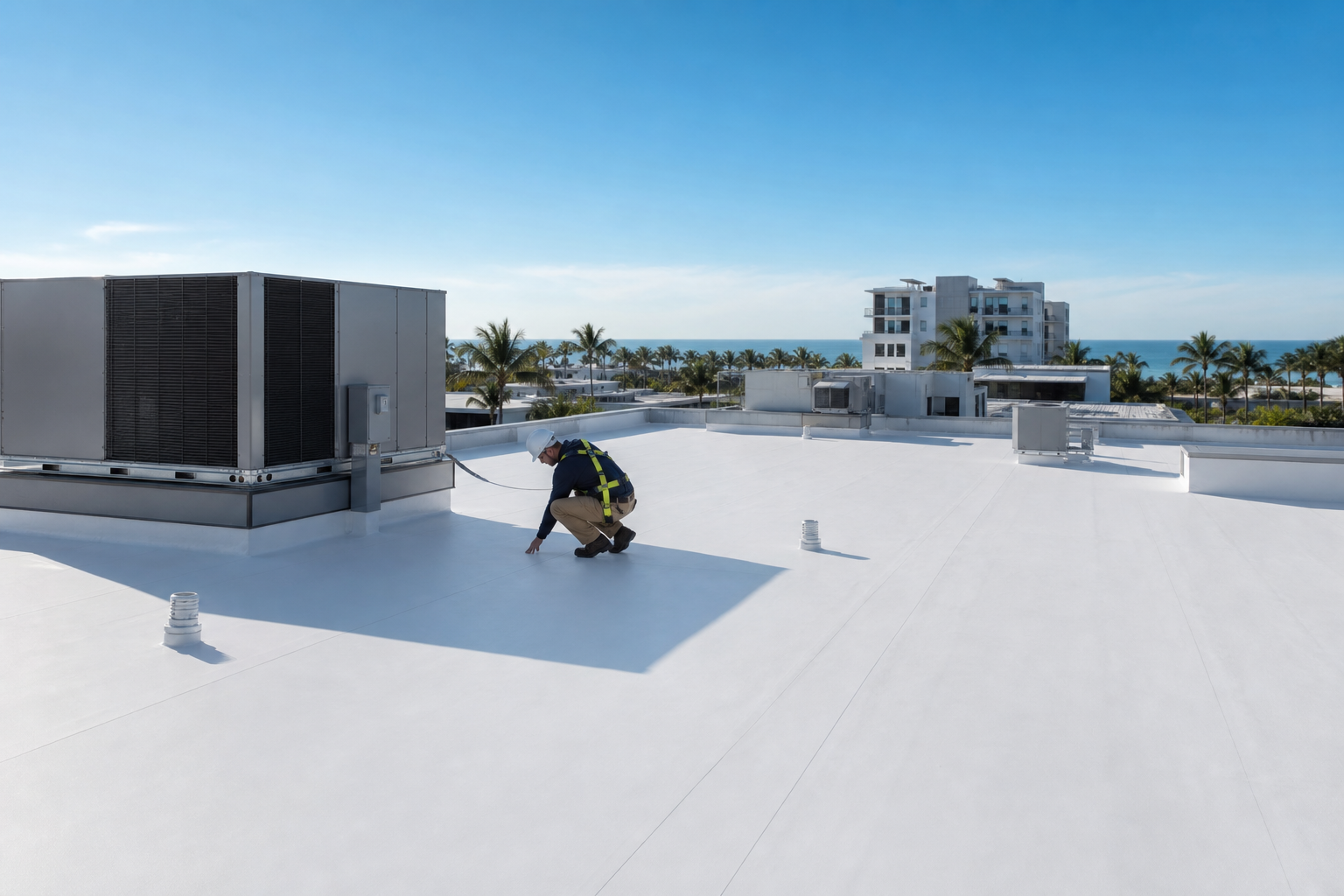
Flat and low-slope roofing

Flat roofing focused on drainage and continuous waterproofing.

“Flat” roofs still need positive drainage. Because water moves slowly, seams, flashings, drains, scuppers, penetrations, edges, substrate, and insulation slope are central to performance.

02

Details that control performance

Most low-slope roof problems concentrate at transitions and areas where water or traffic stress the assembly.

  • Drains, scuppers, and ponding areas
  • Walls, curbs, and penetrations
  • Perimeters and edge metal
  • Walk paths and equipment zones
Frequently asked questions

Questions about flat roofing.

These answers provide a practical starting point. The building, roof assembly, permit jurisdiction, and observed conditions determine the final recommendation.

Should water remain on a flat roof?

Low-slope roofs should be designed to drain. Persistent ponding can increase stress, collect debris, complicate repairs, and indicate drainage or slope conditions that deserve review.

Can a flat roof be coated?

Sometimes. The existing membrane, moisture condition, adhesion, details, drainage, substrate, repairs, and coating manufacturer requirements determine whether restoration is suitable.

Why do flat roofs leak around equipment?

Curbs, penetrations, condensate, service traffic, fasteners, and repeated trade work create concentrated detailing and wear around rooftop equipment.

Simple. Straightforward. No pressure.

Tell us what’s happening with your roof.

We’ll take a look, explain what we find, and give you clear options built around your property and budget.

Call for a free estimate(239) 777-4757